Index Funds vs Mutual Funds
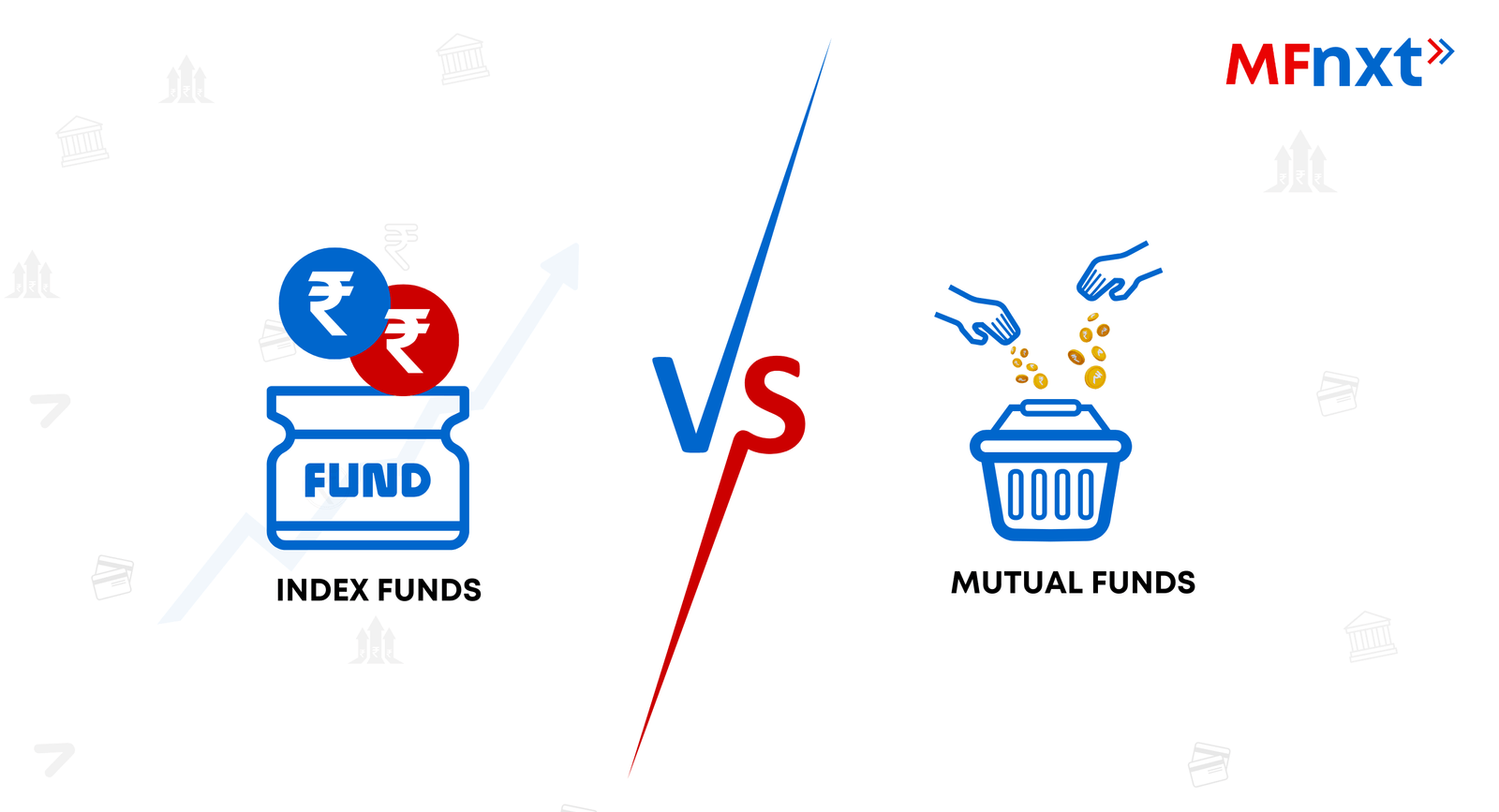
Investing in mutual funds and index funds is an excellent way to grow your wealth over time. But, with so many options available, it's essential to understand the key differences between index funds and traditional mutual funds in India before making a decision.
In this article, we will compare Index Funds vs Mutual Funds in India, explain what index funds are, and provide tips on how to choose the best index funds for your portfolio.
17 Feb 2025
6 min read
What are Index Funds in India?
An Index Fund is a type of mutual fund that aims to replicate the performance of a specific index in the stock market, such as the Nifty 50 or Sensex.
Instead of relying on fund managers to pick stocks, index funds invest in all the companies that are part of the index, based on their market capitalization. The primary goal of an index fund is to match the performance of the index, not to outperform it.
In India, some of the most popular index funds include those that track the Nifty 50, Sensex, and other broader market indices. Index funds are known for their low fees, passive management, and broad diversification.
Looking for Index Funds?
You are in the right place. We have created investment baskets for you to choose from, based on your financial goals.
Start Investing NowIndex Funds vs Mutual Funds in India: Key Differences
When it comes to choosing an investment vehicle, both index funds and mutual funds are excellent options. However, they differ in several ways. Let's explore the key differences between Index Funds vs Mutual Funds.
1. Management Style
The most significant difference between index funds and mutual funds is the management style.
- Index Funds: These are passively managed funds. The fund manager’s primary task is to mirror the performance of the benchmark index (like Nifty 50 or Sensex). Because of this, index funds typically have lower management fees.
- Mutual Funds: These are actively managed funds. In an actively managed mutual fund, the fund manager tries to outperform the market by selecting individual stocks based on research, analysis, and forecasts. The goal is to beat the market average, but this comes with higher fees, as the fund manager actively makes decisions about buying and selling assets.
2. Cost Structure
When you invest in a mutual fund, you may be charged higher expense ratios due to active management. However, index funds, being passively managed, have lower expense ratios.
- Index Funds: Expense ratios for index funds are generally lower (typically ranging between 0.05% and 0.5%) because they simply track an index, which requires minimal intervention.
- Mutual Funds: Actively managed mutual funds can have expense ratios ranging from 0.5% to 2% or more, depending on the strategy and complexity of the fund.
3. Performance and Risk
- Index Funds: The goal of an index fund is to match the performance of the benchmark index. While you may not see significant outperformance, index funds generally provide consistent returns that reflect the broader market. They also have lower risk compared to individual stocks because of the diversification within the index.
- Mutual Funds: The performance of an actively managed mutual fund can vary widely. Some fund managers may succeed in beating the market, but this is not guaranteed. In some cases, actively managed funds may underperform the index, especially after accounting for higher fees and transaction costs.
4. Diversification
- Index Funds: By investing in an index fund, you automatically gain exposure to a diversified set of stocks within the index. This can include large-cap, mid-cap, and sometimes small-cap stocks, depending on the index being tracked. This diversification helps in reducing risk.
- Mutual Funds: Actively managed mutual funds also offer diversification, but it depends on the fund manager’s strategy. The diversification might not be as broad or systematic as an index fund, and the fund’s exposure to certain sectors or stocks may be based on the fund manager's discretion.
What are the Benefits of Investing in Index Funds in India?
Now that we've covered Index Funds vs Mutual Funds in India, let's dive into the benefits of investing in index funds. Here are a few reasons why you should consider adding index funds to your investment portfolio.
1. Low Fees
- As mentioned earlier, index funds are passively managed, which means they come with lower management fees compared to actively managed mutual funds. Lower fees result in higher net returns over time.
2. Simplicity and Ease of Investing
- Index funds are straightforward to understand. The investment strategy is simple: the fund tracks a market index, and your returns mirror the index’s performance. This makes it a beginner-friendly investment option for those who are new to the stock market.
3. Diversification
- By investing in an index fund, you get exposure to multiple stocks within the index. This reduces the risk of putting all your money into a single stock or sector. For example, an index fund that tracks the Nifty 50 will give you exposure to the top 50 companies in India across various sectors.
4. Consistency
- Index funds tend to perform steadily over time, reflecting the overall performance of the market. While they may not deliver spectacular gains in the short term, they provide consistent returns in the long run, making them an excellent choice for long-term investors.
5. No Need for Expert Knowledge
- With index funds, you don’t need to be an expert in stock selection. The fund automatically replicates the performance of an index, making it ideal for investors who don’t have the time or expertise to research individual stocks.
Conclusion
Choosing the right index fund in India can be tricky, especially with so many options available. Another common question investors have is Index Funds vs ETFs (Exchange Traded Funds). While both are similar in many ways, they also have some key differences.
Both index funds and mutual funds have their advantages and drawbacks. The choice between the two depends on your investment goals, risk tolerance, and preference for active or passive management.
- If you prefer low-cost, consistent returns, and long-term growth, index funds may be the right choice for you.
- On the other hand, if you are willing to take on more risk for potentially higher returns and want to rely on professional management, actively managed mutual funds may suit you better.
At MFnxt, we specialize in offering a curated selection of index funds for investors in India. Our platform makes it easy to invest in some of the best-performing index funds in the country.
Disclaimer: This blog is purely for educational purposes. Any mention of fund names, investment strategies, or other financial details should not be considered as recommendations or advice.Related Blogs

What is an Index Fund in India?
When it comes to investing in India, index funds have become increasingly popular. Whether you're new to investing or lo...
Read More
How to choose Good Index Funds in India?
Investing in the stock market can seem daunting, especially for beginners. But with the right approach, you can make you...
Read More
Index Funds vs ETFs in India: Key Differences Explained
Investing in the stock market can seem a bit confusing, especially if you’re just starting out. But don’t worry! The...
Read More
A Beginner’s Guide to Investing in Index Funds in India (2025)
Getting started with investing in India can feel confusing — with so many options, terms, and risks. But if you’re l...
Read MoreLooking for Index Funds?
You are in the right place. We have created investment baskets for you to choose from, based on your financial goals.
Start Investing Now